Hand holding a heart.

Hospice Palliative Care Service

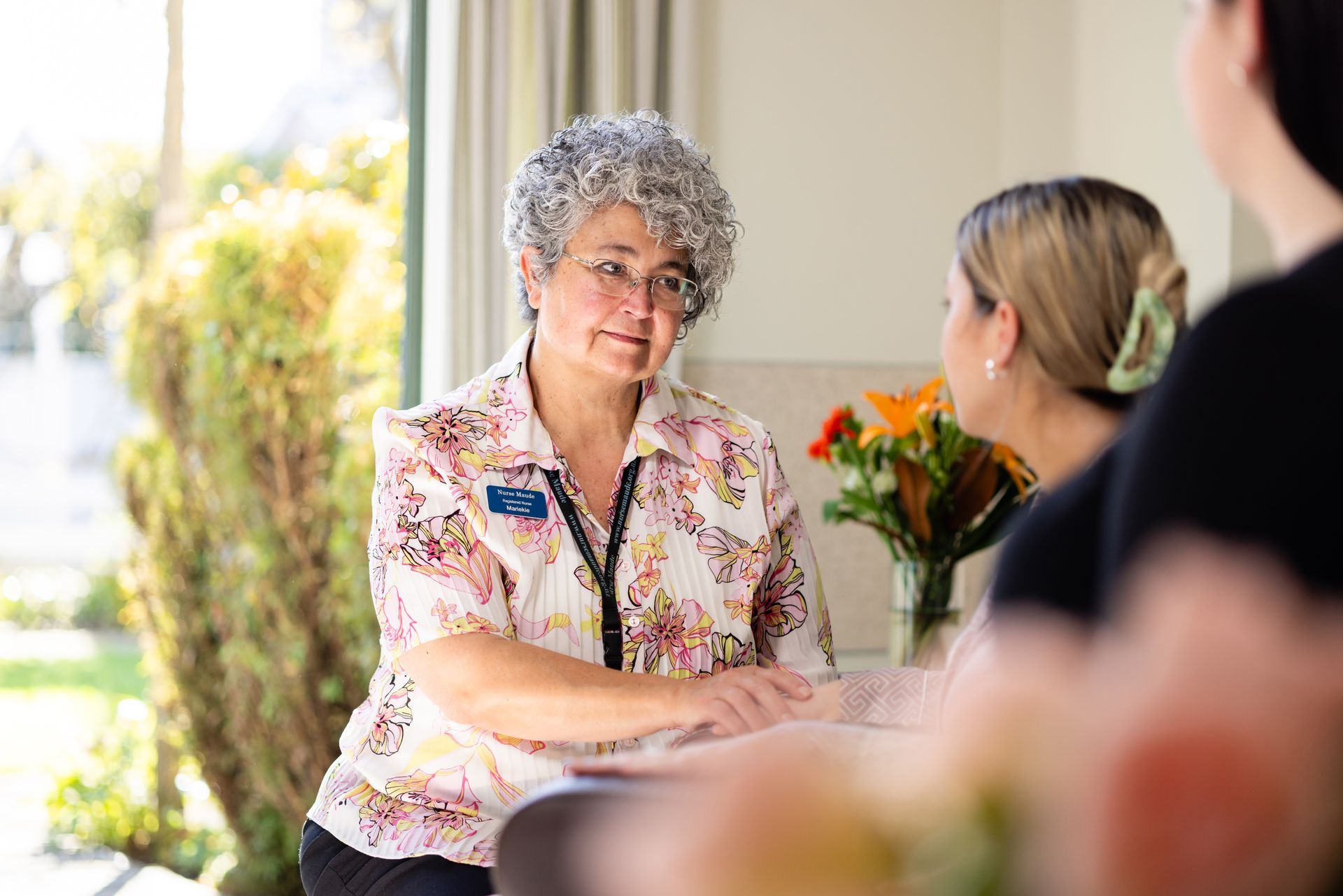
Our Hospice Palliative Care Service provides compassionate, specialist support for people with life-limiting illness and their whānau. We focus on comfort, dignity, and quality of life - offering physical, emotional, spiritual and social care when it matters most.


Hospice Palliative Care

Palliative care helps adults and children with a life-limiting illness live their life as fully and comfortably as possible. Palliative care identifies and treats symptoms which may be physical (taha tinana), emotional (taha hinengaro) , spiritual (taha wairua), or social (taha whānau). Family/whānau and friends can also receive practical and emotional support.
Hospice Info Read Guides →
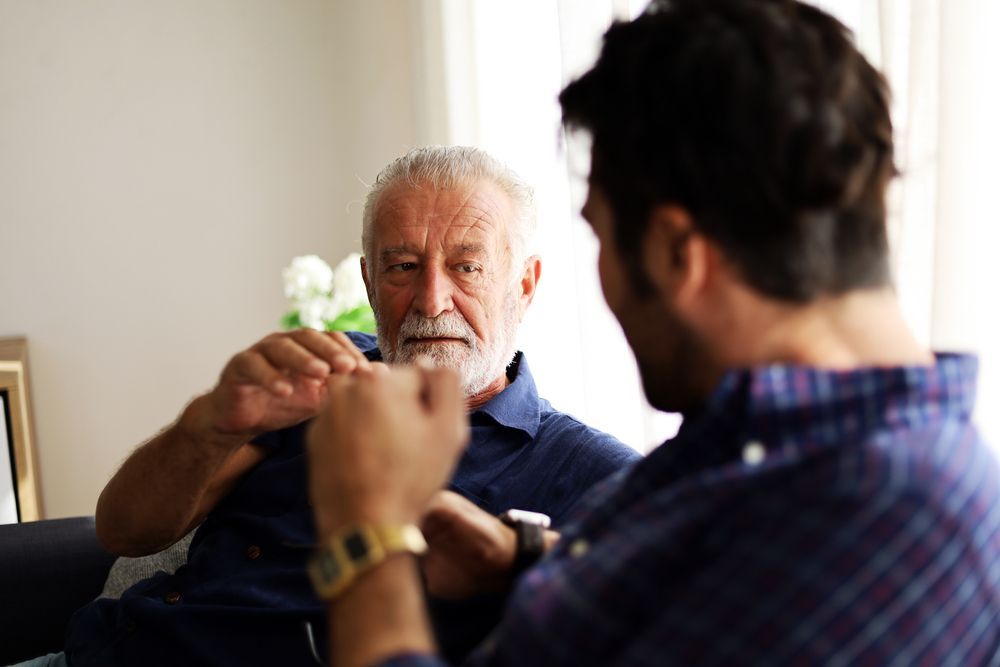
Two men are sitting on a couch talking to each other

Care & support when you need it most

Nurse Maude provides a range of specialist hospice palliative care services for those living in Canterbury. All services are free to patients and their families/whanau.


Referrals for specialist palliative care can be made by any health professional. Most patients have their palliative care needs met by primary providers such as district nursing teams and GPs. The Hospice Palliative Care team are specialist providers and are skilled at monitoring and supporting patients at home, in aged care facilities, or in the hospice inpatient unit, who may have more complex or challenging symptoms causing concern. The team always works alongside the district nurses, GPs, and other health professionals to provide the best possible care.


Patients and their families/whānau may self-refer for counselling.

Help us improve our service

If you would like to provide feedback on any aspect of the Hospice Palliative Care Service, please complete the short survey below. Your feedback is important to us and helps us to continually improve the service we provide to our patients and whānau. Thank you.

Feedback Survey
A woman in a blue scrub is smiling and holding a clipboard

Our position on the End of Life Choice Act 2019

We will follow our responsibility in accordance with the End of Life Choice Act 2019 if a patient wishes to explore assisted dying. We respect all views, and we will continue to provide the best care possible to patients and their whānau. However, our staff will not assess patients for eligibility, nor be present during the administration of any medication used in assisted dying, wherever that may take place. Assisted dying will not occur on hospice premises. We will continue to provide care and support up to the point of assisted death, and during bereavement.

Latest news
Two new appointments headline on a blue gradient slide with two silhouetted figures.
20 July 2026
Nurse Maude appoints Kelvin Mason as Chief Financial Officer and welcomes Rowhan Kelly as General Manager, Service Development, strengthening its leadership.
Press release announcing new partnership to shape home care for kaumātua, with brochures on a blue gradient background
8 July 2026
Nurse Maude Association and Te Puawaitanga ki Ōtautahi Trust have entered a new partnership to co-design the future of home care for the community in Ōtautahi, bringing together more than a century of community care experience with a kaupapa Māori approach to whānau support. The organisations have signed a Memorandum of Understanding formalising their shared commitment to design and deliver home care services grounded in whānau, responsive to Māori, and connected to the wider needs of the community. The partnership brings together Nurse Maude's long-standing expertise in home and community health care with Te Puawaitanga ki Ōtautahi Trust’s kaupapa Māori approach and extensive experience supporting whānau from māmā and pēpi through to our kaumatua services such as our Taurite Tū; Wai Ora and Oranga Tonutanga programmes. Together, the organisations will explore new models of care that support whānau and kaumātua to remain well, connected and living independently at home. The signing, held in the lead-up to Matariki, reflected the shared values and whakapapa of both organisations. Matariki is a time to remember those who have gone before us, give thanks for the present, and look ahead with hope. A strong theme throughout the day was the legacy of Dame Aroha Reriti-Crofts and Sibylla Maude, two remarkable wāhine whose vision, compassion and commitment to their communities continue to shape the work of both organisations. This partnership honours that legacy, while creating opportunities for future generations. While the partnership has a strong focus on improving outcomes for Māori, both organisations believe the learning and approaches developed through this mahi have the potential to strengthen home care services for everyone in Ōtautahi.
Bright hospital room with two beds, windows, a table, and a sink in the foreground.
14 May 2026
Nurse Maude welcomes the Government’s announcement of 15.5 million in additional funding for paediatric palliative care, recognising the difference this will make for children, young people and their whānau across Aotearoa. Louise Zacest, Chief Executive of Nurse Maude, says the investment acknowledges the complexity and importance of providing compassionate, specialist care at some of life’s most challenging times. “Caring for children with life-limiting conditions, and supporting their families, requires highly skilled, multidisciplinary teams and a strong network of services. This funding is an important step toward strengthening that support for families when they need it most.” In Canterbury, Nurse Maude already provides specialist paediatric palliative care both in the community and within its hospice, supported through a combination of its own investment and the generosity of its community. “We are proud to have specialist paediatric palliative nurses as part of our team, delivering care wherever it is needed — whether that’s in a child’s home or in our hospice,” says Zacest. Nurse Maude’s new hospice, opening on 17 June, has been thoughtfully designed to support children and their families, including dedicated paediatric facilities and an adjoining room so whānau can stay close to their child during inpatient care. This space has been made possible through a generous bequest from Cantabrian Mr Cyril Smith.
Show More