Seven days, seven conversations: making it easier to talk about death and dying
Talking about death and dying isn’t always easy. We can worry about saying the wrong thing, avoid conversations because they feel uncomfortable, or simply not know where to begin.
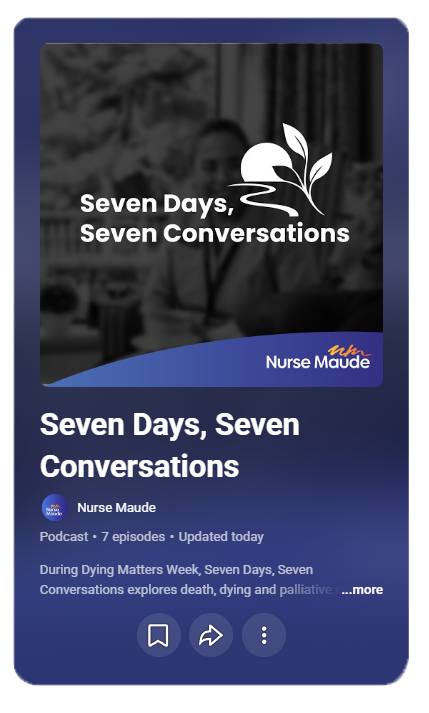
During Dying Matters Week we wanted to help make those conversations a little easier through sharing Seven days, seven conversations – a podcase series of conversations exploring death, dying and palliative care from a range of perspectives.
Hosted by Nurse Maude Hospice registered nurse Grace, the series includes helpful reflections from members of the Nurse Maude team who work alongside people and whānau at the end of life.
The six conversations are not intended to cover every topic, but to get us talking, and to help us stop into a conversation topic that can be challenging. We wanted to remind people of the importance of listening, and being present in these conversations and these moments.
Across the six conversations, Grace and her guests explore:
- What hospice care really means –Julia challenges the idea that hospice is simply a place people come to die. Hospice care can provide symptom support, respite and another layer of care, with many people returning home after an admission.
- Being present when we can’t fix things – Sarah talks about the importance of listening, following someone’s lead and recognising that we don’t always need the perfect words. Sometimes simply being there is enough.
- Caring for someone at home –Claire explains why families don’t need to manage everything themselves. Connecting with community palliative care services early means advice and support are there when things change.
- Starting conversations about death and dying – Grace and Sarah discuss why talking about death doesn’t make it happen or remove hope. Asking permission, listening and starting the conversation before a crisis can make it easier to understand what matters to someone.
- Palliative care in residential care –Sonya shares the role of Nurse Maude’s PARC team in supporting residential care staff, residents and families, including the growing number of younger people with life-limiting illnesses who require residential care.
- When eating changes at the end of life –Helen explains why appetite naturally reduces and how the focus can shift from nutrition and quantity towards comfort and enjoyment. Food may change, but the opportunity to show love and care remains.
While each conversation explores something different, there is a consistent message through the series: we don’t need to have all the answers to talk about death and dying well.
Being willing to start a conversation, listen to what matters to someone, ask for help when it is needed, and simply be present can make death and dying feel less frightening and more human.
We hope you’ll be encouraged by listening to Seven days, seven conversations.
Understanding Hospice | Ep.1
What hospice care really means –Julia challenges the idea that hospice is simply a place people come to die. Hospice care can provide symptom support, respite and another layer of care, with many people returning home after an admission.
When there is nothing to fix | Ep.2
Being present when we can’t fix things – Sarah talks about the importance of listening, following someone’s lead and recognising that we don’t always need the perfect words. Sometimes simply being there is enough.
Caring for someone at home | Ep.3
Caring for someone at home - Claire explains why families don’t need to manage everything themselves. Connecting with community palliative care services early means advice and support are there when things change.
Starting the conversation | Ep.4
Starting conversations about death and dying – Grace and Sarah discuss why talking about death doesn’t make it happen or remove hope. Asking permission, listening and starting the conversation before a crisis can make it easier to understand what matters to someone.
Palliative care in aged residential care | Ep.5
Palliative care in residential care – Sonya shares the role of Nurse Maude’s PARC team in supporting residential care staff, residents and families, including the growing number of younger people with life-limiting illnesses who require residential care.
Food, love, and eating near the end of life | Ep.6
When eating changes at the end of life – Helen explains why appetite naturally reduces and how the focus can shift from nutrition and quantity towards comfort and enjoyment. Food may change, but the opportunity to show love and care remains.
Having your own conversation | Ep.7